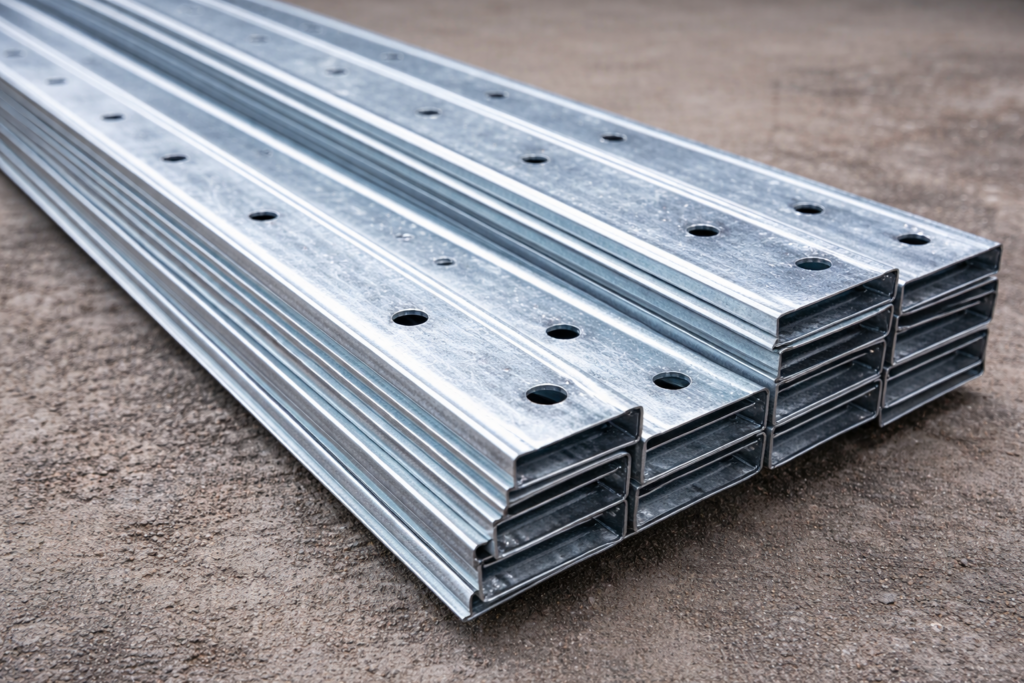
galvanize wall plate
Structural Load Distribution Base for Roofing and Truss Systems.
A Galvanized Wall Plate is a critical structural component installed at the top of masonry or concrete walls to provide a stable, level bearing surface for roof trusses, rafters, or steel frames. It ensures proper load distribution, structural alignment, and secure anchorage between the building’s walls and the roofing system.
Galvanized wall plates are widely used in residential, commercial, industrial, and institutional buildings, especially in modern roofing systems where durability and long-term performance are essential.
Available Gauges (Thickness Options).
Galvanized wall plates are produced in various thicknesses and profiles to match structural requirements, commonly ranging from:
0.70 mm – 0.95 mm for standard residential and commercial applications
1.20 mm and above for heavy-duty or industrial roofing systems
They can be supplied in flat strips, angle sections, or custom-formed profiles depending on project design.
Why Galvanized Steel Purlins Are Important.
1. Proper Load Distribution
Wall plates spread roof and truss loads evenly along the wall, reducing stress concentration and preventing structural cracking.
2. Secure Truss and Rafter Anchorage
They provide a firm base for fixing:
Steel trusses
Timber trusses
Rafters and purlin systems
This improves overall roof stability and wind resistance.
3. Corrosion Resistance
The zinc coating protects wall plates from moisture-related rust, making them suitable for humid, coastal, and high-rainfall environments.
4. Improved Structural Alignment
Wall plates ensure accurate roof alignment, level installation, and consistent spacing of trusses or rafters.
5. Long-Term Durability
Unlike untreated steel or timber alternatives, galvanized wall plates offer long service life with minimal maintenance.
Material Composition (Industry-Standard Galvanized Steel).
Galvanized wall plates are manufactured from high-strength carbon steel and protected with a zinc coating to prevent corrosion.
Typical industry composition includes:
1. Steel Core – ≈ 98–99%
High-quality carbon steel provides structural strength and rigidity.
Designed to carry and evenly distribute roof loads across the supporting wall.
Maintains dimensional stability under long-term load conditions.
2. Zinc Coating – ≈ 1–2%
Applied through hot-dip galvanization or equivalent processes.
Protects the steel from rust, moisture, and environmental degradation.
Provides sacrificial protection, ensuring corrosion resistance even if the surface is scratched or cut.
Common standards include Z275 or equivalent, depending on exposure conditions.
Compatibility and Applications.
Galvanized wall plates are compatible with:
Galvanized steel trusses
Galvanized steel purlins
IBR, Strip Lock, Deep Trough, and Eurotiles roofing sheets
They are commonly used in:
Residential housing
Commercial buildings
Warehouses and factories
Schools, hospitals, and institutional structures
Long-Term Value to Customers.
Using galvanized wall plates ensures:
Improved roof stability and safety
Reduced structural maintenance
Protection against corrosion and environmental damage
Better overall performance of the roofing system
Strong return on investment over the building’s lifespan